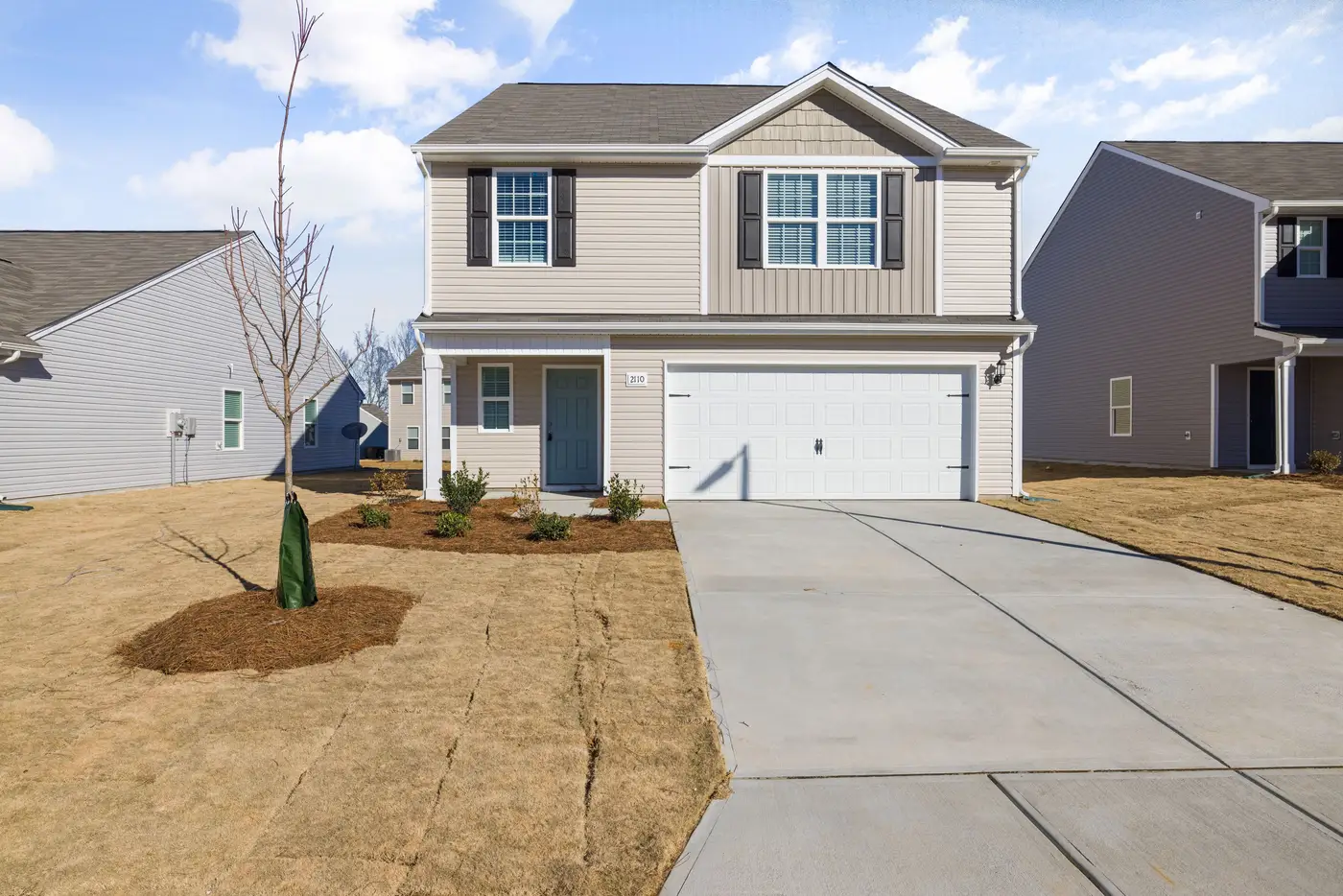
Pull up a comp sheet sometime and look for the one that makes you stop scrolling. Same subdivision, same year built, GLA within forty square feet, same bed-bath count, closed six weeks before your valuation date, half a mile from the subject. Every adjustment column comes in near zero. On paper it's the cleanest match in the file.
Then you look at the parcel.
The subject sits on a flat, open lot with a two-car driveway and a new-looking roofline. The comp backs up to a drainage easement, has a sagging carport instead of a garage, and the imagery from last year shows a blue tarp over one corner of the roof that never made it into any field you can query. Same bedrooms. Same square footage. Completely different property, and nothing in the record tells you that until you go look.
This happens more than the model error logs suggest, because nothing in a standard feature set is built to catch it. MLS fields describe a house the way a form describes a person: height, weight, date of birth. They don't describe the thing an appraiser notices in the first three seconds of pulling into the driveway. Lot shape. What the backyard backs onto.
Whether the landscaping says "maintained" or "deferred." Whether the neighbor's lot looks like it belongs to the same neighborhood or a different one entirely. An appraiser walks the comp and adjusts for condition by eye. A tabular model has no eye.
The irony is that this pair of properties probably scored as a near-perfect match precisely because the fields that exist are the fields that generalize well, square footage, bed count, year built, the attributes easiest to standardize across every MLS in the country. The fields that would have flagged the difference, roof condition, lot grading, proximity to a retention pond, canopy cover, are either absent from the schema or buried in free-text remarks nobody vectorizes. The comp engine isn't wrong about what it measured. It's just not measuring the thing that mattered here.
I've started treating runs like this as a kind of diagnostic rather than a one-off miss. When a model's top comp candidate and a human reviewer's gut pick diverge sharply, it's rarely because the model made an arithmetic error. It's because the model was never shown the signal a person uses without thinking about it: what this parcel looks like, right now, from above and from the curb. Condition, context, the stuff that shows up in an appraisal narrative as "subject is superior in overall appeal" and nowhere in the comp's structured data at all.
That gap is exactly what curb-appeal and context signal is for as a model input rather than a QC afterthought. Instead of waiting for a reviewer to catch the mismatch after the fact, a per-parcel embedding built from current imagery can sit alongside the tabular fields from the start, carrying the information that "matches on paper" simply doesn't. You can read more about how that works as a direct input into a valuation model, keyed to the same record IDs you already use.
None of this replaces the fields that work. GLA, lot size, year built, those are still doing real work in every adjustment grid out there. But they were never built to answer whether this actually looks like the subject, and that question doesn't go away just because the schema has no column for it. The comp that matches on every field and looks nothing alike from above isn't an edge case. It's a reminder of exactly where the schema runs out.
If you're tired of finding that gap after the fact, it might be worth feeding the view into the model before the comp sheet ever gets pulled.