Anyone who's sat in a model review meeting has heard someone ask "are we hedonic or repeat-sales?" as if it's a coin flip. It isn't. The two methods answer different questions, and only one of them is built to produce a point estimate for a single parcel on a given day.
What repeat-sales indices are actually built for
A repeat-sales index, the Case-Shiller approach and its descendants, tracks the price change of the same property between two arm's-length sales. No characteristics go into the regression. No square footage, no bed count, no lot size. The model just compares sale price at time one to sale price at time two and attributes the delta to market movement.
That design is elegant for one job: building an aggregate price index for a metro, a zip, a tract. It controls for quality by construction, since the property is identical at both ends of the pair. It's a bad fit for a different job: telling an underwriter what 1420 Elm Street is worth this week. Most parcels in a portfolio haven't repeat-sold in the lookback window. New construction never has. And even where a pair exists, the index tells you how the type moved, not what condition, renovation, or lot-specific factors did to this specific house between the two sales.
So if your AVM needs a per-property dollar figure, not just a county-level trend line, the repeat-sales index isn't the engine. It's an input to the engine, at best, a market-movement adjustment layered on top of something else.
Where the hedonic model actually drives the valuation
That something else is almost always hedonic, or a hedonic-comps hybrid. The hedonic approach regresses sale price on a feature vector: GLA, bedroom and bathroom count, lot size, year built, location fixed effects, sometimes a condition rating pulled from the last appraisal or MLS remarks. Coefficients on those features are the whole point. They let the model price a specific parcel using its specific attributes, which is exactly what a lender or an AVM vendor needs for a point estimate.
The catch is well known to anyone who's tuned one of these models: the feature vector is only as good as the fields feeding it. "Condition" in most MLS and tax-roll data is a stale categorical field, updated at list time and never again. Curb appeal, deferred maintenance, an overgrown lot versus a landscaped one, a roof that's visibly near end-of-life, none of that shows up as a column. The hedonic model does its job well on the fields it has. It has no mechanism for the fields nobody captured.
AVM methodology comparison: picking the right place for imagery
This is the actual answer to the "hedonic vs repeat-sales" question for anyone building or buying an AVM: repeat-sales is a market-trend input, hedonic (or hybrid) is the point-estimate engine, and the engine is the one that can take an additional feature. A repeat-sales regression has no slot for a new variable because it takes no characteristics at all. A hedonic model has exactly that slot, and it's usually sitting half-empty where condition and curb appeal should be.
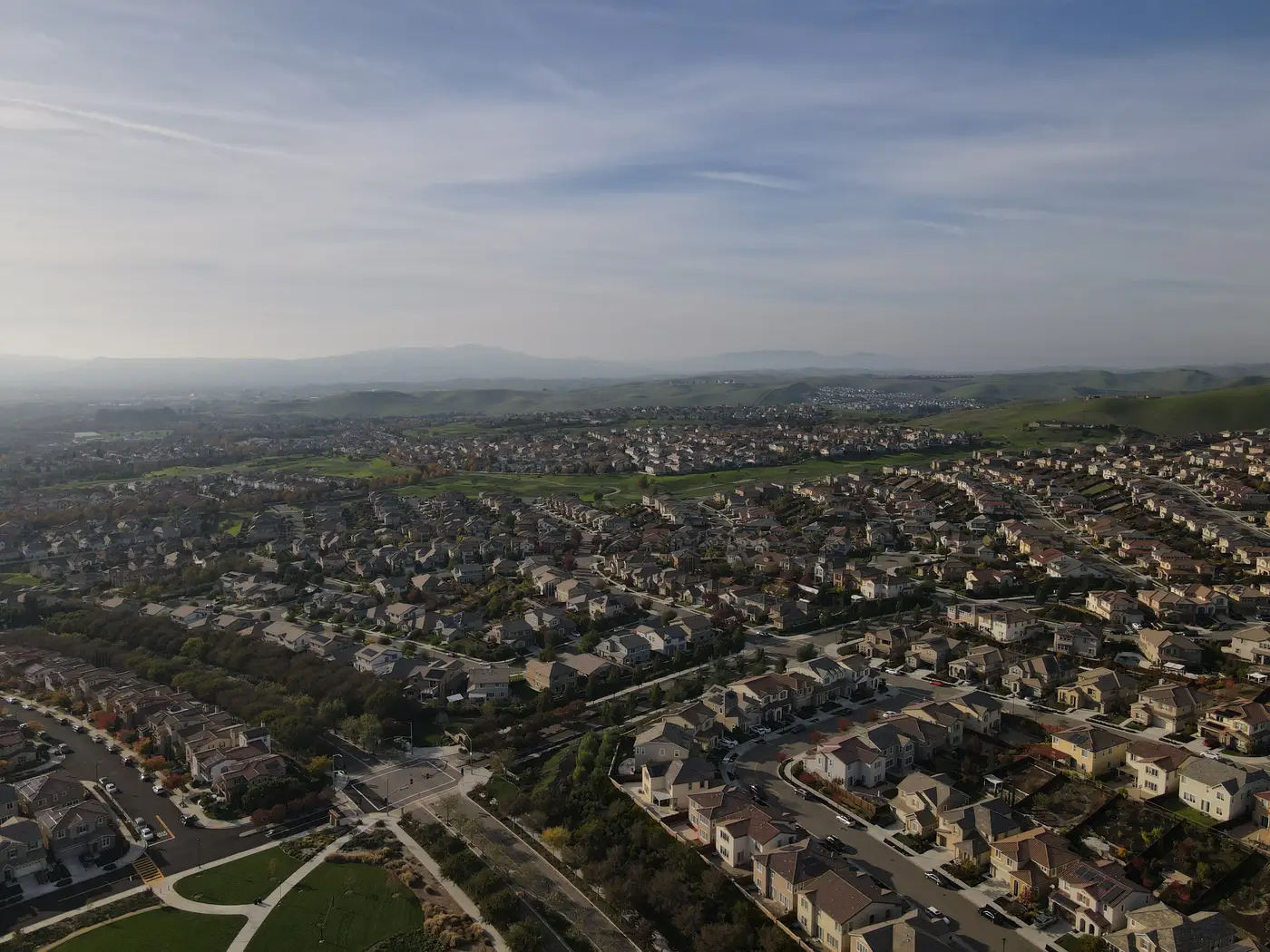
A per-property visual embedding slots directly into that empty space in the hedonic specification. It sits alongside GLA and bed count as an added vector, carrying the parcel-and-surroundings signal that tabular fields never captured in the first place. If your team already runs a hedonic or hybrid model and is looking for a way to get curb-appeal and context signal into the feature set without building a computer-vision pipeline from scratch, AVM Imagery packages that as a vector file keyed to your existing record IDs.
If hedonic is the engine your AVM runs on, it's worth seeing what a parcel-level imagery vector adds to it.