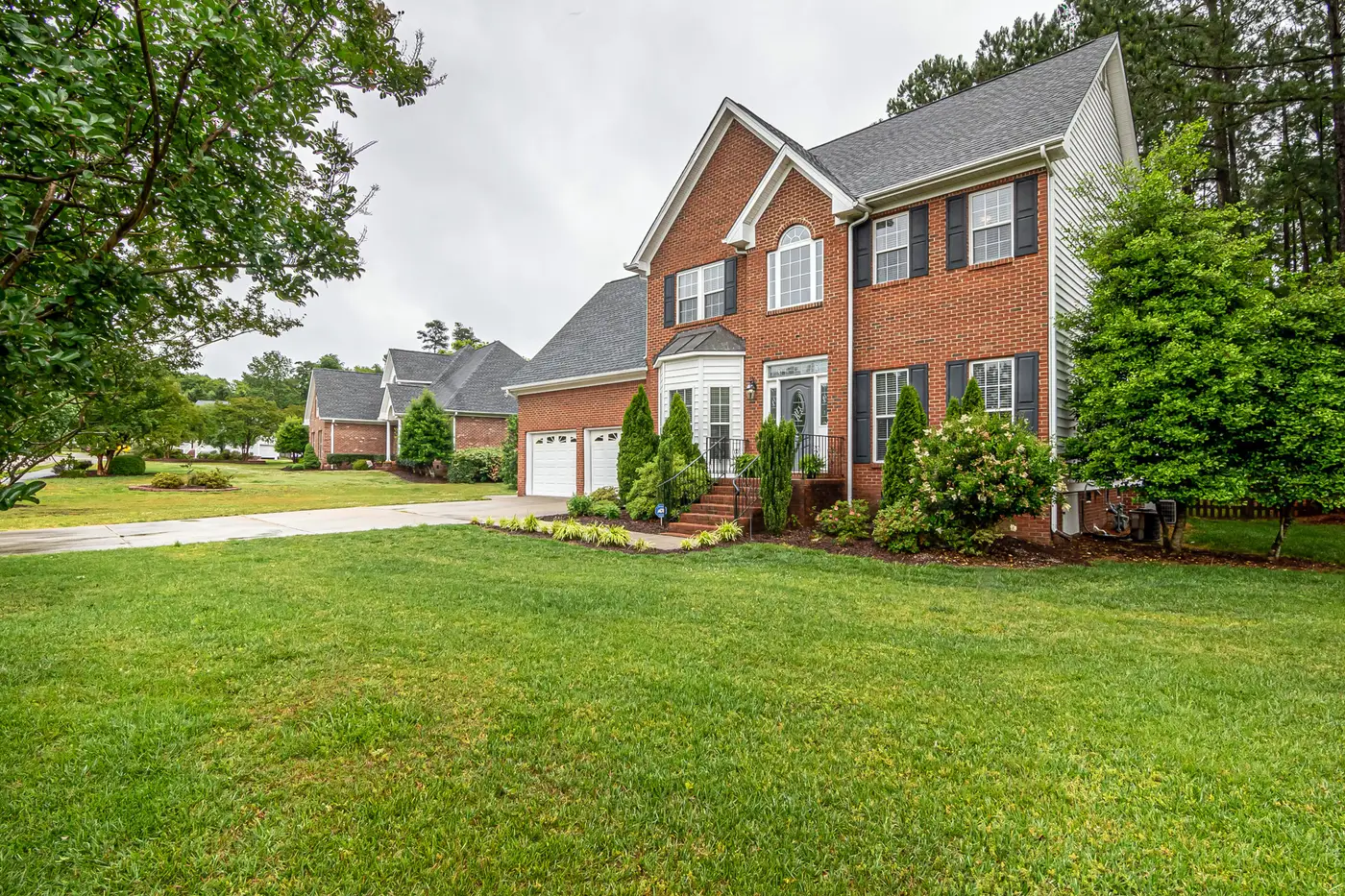
If you've ever tried to add a learned embedding to a valuation model, you've probably hit the same wall every quant team hits around month two: the feature helps the model, and compliance has no idea what to do with it.
An embedding is a vector of a few hundred numbers that encode something real about the parcel and the block around it. None of those numbers map to a sentence a loan officer can read off a denial letter. Reg B doesn't care that your model got better. It wants a reason code tied to the applicant's specific record, and "dimension 214 of the imagery embedding was low" is not a reason code.
Why this breaks the usual pipeline
Most AVMs generate reason codes by reading feature importances off a tabular model: square footage, comps, days on market, condition rating. Each of those already has a name a human understands, so turning a SHAP value into "below-market comparable sales" or "small lot relative to neighborhood" is mostly a lookup table.
An image embedding skips that step entirely. The vector was learned, not engineered, so the individual dimensions don't correspond to concepts like "roof condition" or "overgrown lot" on their own. You can run SHAP against the embedding exactly like any other input and get a clean attribution score for how much it moved the valuation. Reading that score and knowing why takes extra work, and extra work is exactly what a compliance review will ask you to show.
Getting from a SHAP value to a reason code
The teams that have made this work do it in three steps, and none of the three are optional if you want something that survives a model risk review.
First, run SHAP (or integrated gradients, if your pipeline already uses it) at the embedding level, treated as a single grouped feature the same way you'd group one-hot encoded categoricals. This tells you how much the imagery signal moved the estimate for that specific property, which is the number your model documentation needs regardless of what happens next.
Second, decompose that grouped attribution back to something legible. The practical way to do this is a probing layer: train a small set of auxiliary classifiers or regressors on the embedding to predict interpretable sub-scores like visible deferred maintenance, lot vegetation density, or presence of additions and outbuildings, using a labeled sample as ground truth. Then attribute the embedding's SHAP contribution across those sub-scores rather than across the raw vector dimensions. This is the step most teams underbudget. It's a real modeling project, not a one-line wrapper.
Third, map the highest-attribution sub-scores to your existing reason code library the same way you already map a low comparable-sales score to a code. If "visible deferred maintenance" drove a meaningful share of a negative adjustment, it gets a code the same way a low condition rating would. The embedding stops being a black box at the point you've built that sub-score layer. Before that, it's just a very good feature with no paper trail.
What this means for how you source the imagery feature
None of that probing or reason-code work happens for you upstream. What a clean imagery feature can do is make the downstream explainability work tractable instead of impossible. A per-parcel vector keyed to your own record IDs, refreshed on a known cadence, lets your model risk team treat it like any other versioned input: same record join, same SHAP run, same audit trail, instead of a one-off scraping job nobody can reproduce a year later. That part of the problem is a data engineering decision, and it's worth getting right before you build the explainability layer on top of it. Our landing page at avmimagery.com walks through how that vector is delivered and keyed if you want the specifics.
If you're scoping this for next quarter's model refresh, it's worth lining up the imagery feature and the reason-code mapping work at the same time, because one doesn't hold up without the other.