Every AVM team budgets for model retraining. Fewer budget for the thing that makes retraining worth doing: a new look at the parcel itself.
Pull a cadence calendar from any mid-size lender's data science group and you'll see the pattern. Comp data gets refreshed monthly. Tax roll pulls happen quarterly. The model itself gets revalidated on whatever schedule compliance signed off on, usually annually, sometimes faster if someone got burned.
And the imagery underneath it all, if it's in the stack at all, sits wherever it landed whenever someone first licensed it. Nobody put a line item next to "re-fly the portfolio" because nobody thought of it as a recurring cost, and it got treated like a one-time enrichment project instead of a sensor that needs tending.
That's a mistake, and it's an easy one to make, because the thing that changes between passes doesn't show up in any other feed you're already pulling.
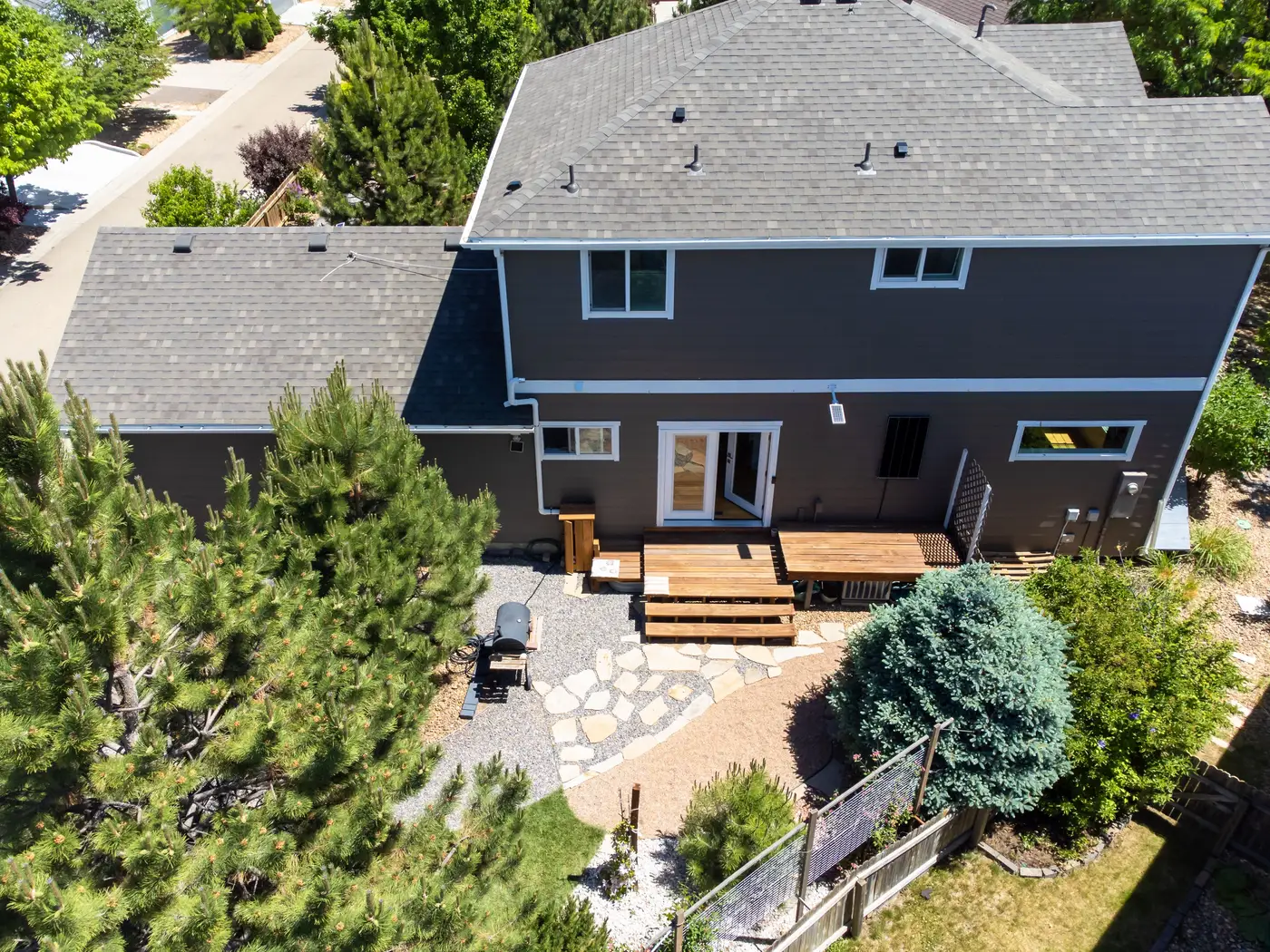
Here's what twelve months actually does to a parcel. A roof gets replaced, not because it failed but because the owner refinanced and had the cash. A pool goes in. A pool gets filled back in, which happens more than people expect once you start watching for it.
A detached structure appears in the side yard that never made it to a permit filing, or took eight months to show up in one if it did. A hedge that used to block the sightline to a busy road grows out, or gets ripped out. Three houses on the block get the kind of exterior remodel that moves a comp a notch up, and none of that shows up in tax assessor data until the next reassessment cycle, which in a lot of counties is years away, not months.
None of this is catastrophic on its own. A single missed pool doesn't blow up a valuation. But a portfolio has thousands of parcels doing this simultaneously, in small increments, and a model trained on last year's condition signal is quietly drifting away from this year's ground truth the whole time nobody's looking. The error doesn't announce itself. It shows up later as a wider confidence band, a higher override rate from the review team, or a borrower disputing a value that felt low for reasons the model couldn't see and couldn't explain.
The annual refresh, if you want to call it a tradeoff at all, weighs a cost you schedule against a cost you absorb later as noise. Re-flying or re-pulling imagery for a portfolio once a year is a known, plannable line item. Letting the imagery go stale is an unplanned one, showing up as model performance you can't fully trace back to a cause, because the input that changed isn't sitting in your feature store to check against.
What makes this worth writing about now is that the cadence question is finally separable from the imagery question. You don't need a new flyover contract or a drone program to get a yearly look at condition and context. A parcel-level embedding built from annual very-high-resolution passes can sit next to your tabular fields the same way a new comp field would, refreshed on the same calendar you already use to revalidate the model. AVM Imagery's rundown of how that vector gets built and keyed to your record IDs covers the mechanics, which is the part that usually kills these projects before they start.
If your model's confidence bands have been drifting wider than your comps can explain, the gap might not be in your comps at all. It might be a parcel that looks different than it did at last year's pass, waiting for someone to go check it. Line up that check before next year's budget cycle locks, and let AVM Imagery be the annual pass you schedule on purpose.