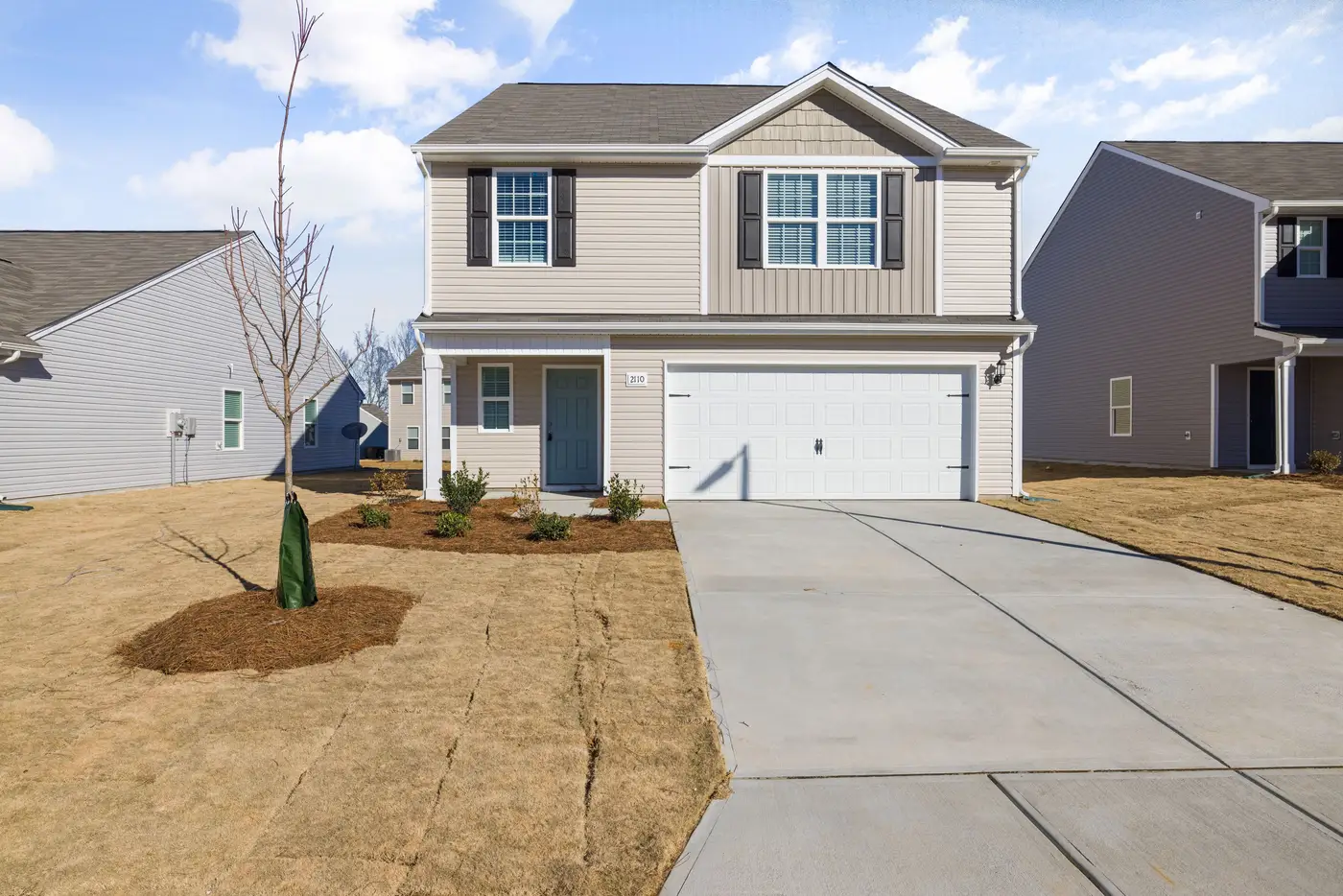
Every appraiser who's walked a comp knows deferred maintenance when they see it. A roof that's a few years past its useful life. Siding that's chalking. A driveway with frost heave nobody's patched. None of that shows up in your condition field, your year-built, or your last-sale price. It shows up in a photo, and until recently nobody was feeding photos into the model in a form a gradient boosted tree or a neural net could actually use.
So what counts, specifically, as a deferred-maintenance signal when you're looking at a parcel from very high resolution imagery rather than an appraiser walking the lot?
The signals that show up at sub-meter resolution
At 0.5 m ground sample distance you're resolving enough texture and geometry to pick up real condition markers:
- Roof condition. Missing or lifted shingles, patched sections that don't match the surrounding course, moss or algae streaking on north-facing slopes, a ridge line that's started to sag. Roof age is the single biggest driver of condition adjustments in most AVMs, and it's almost never in your tabular data unless a permit was pulled.
- Siding and trim. Peeling paint shows up as mottled texture and uneven color across a wall plane, especially on sun-exposed sides, alongside water staining under windows and gutters.
- Hardscape. Cracked or heaved driveways and walkways, a carport slab that's settled, a retaining wall that's bowing.
- Lot upkeep. Overgrown or dead turf, unmanaged landscaping encroaching on structures, debris or stored materials accumulating in a side yard.
- Visible patch repairs. Tarps on roofs, mismatched replacement windows, boarded sections. These are blunt signals but reliable ones.
None of this is a checklist a vision model fills out like a home inspection form. It's visual texture and geometry that correlates with condition, the same way an appraiser's eye correlates a faded roof with "needs replacement in 2 to 3 years" without measuring a single shingle.
Why the tabular fields miss it
The MLS condition field is self-reported by a listing agent with an obvious incentive. The appraiser's C1-through-C6 rating only gets refreshed at sale or refi, so it's stale the moment the ink dries. Permit records tell you when work happened. They say nothing about the shape the property is in between permits, and plenty of maintenance never pulls a permit at all.
Year built tells you nothing about the roof that got replaced in 2019 or the one that didn't. If your model's condition signal comes entirely from these fields, you're modeling what sellers and county records chose to tell you. That's a different thing from what the parcel looks like today.
Grading curb appeal without pretending it's a checklist
Here's where it's worth being precise about what imagery-derived signal is. It isn't a per-defect classifier outputting "peeling paint: yes" or a five-point curb-appeal grade with a confidence score attached. Deferred maintenance is graded on a spectrum, lighting and shadow confound raw pixel comparisons, and a single annual capture means a roof replaced in March and a roof that's three years from needing one both show up the same way until next year's pass. Anyone promising a clean numeric score from a single image is overselling it.
What a learned embedding of the parcel and its surroundings does instead is hand the model a dense representation of everything in that image frame, roofline, siding, hardscape, lot condition, surrounding block, as one more input alongside your tabular fields. The model finds the correlations itself instead of you hand-coding "peeling paint equals minus X dollars." That's the approach behind AVM Imagery: a per-property vector keyed to your existing record IDs, refreshed annually, built so the thing your tabular data has always left out finally has a seat at the table.
If you're scoping what a curb-appeal input would look like against your own parcel set, that's a conversation worth having before the next model refresh.