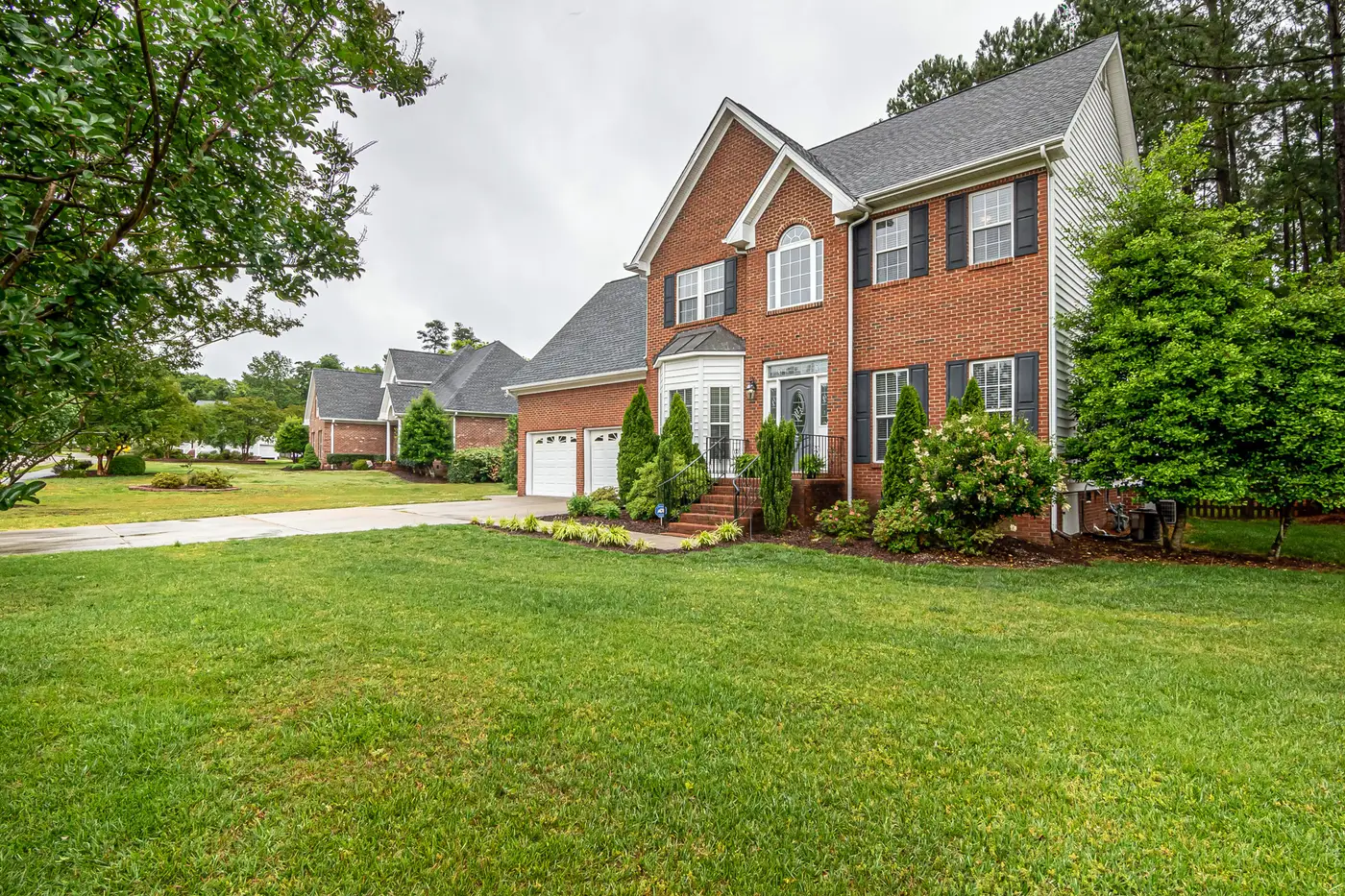
Ask any appraiser what moves a value up or down outside the comps grid, and condition and curb appeal come up fast. Ask most AVMs the same question and you get a shrug, because the fields that feed the model don't encode it. Curb appeal scoring is the attempt to close that gap: a numeric or categorical score that stands in for "how does this property and its immediate surroundings actually look," derived systematically rather than from a human walking the block.
Why tabular fields don't carry this signal
Your feature set has square footage, bed/bath count, lot size, year built, and maybe a condition code pulled from a prior appraisal or tax record. None of that tells you whether the roof is patched with a tarp, whether the landscaping is maintained, whether the house next door has a car on blocks in the driveway, or whether the whole street reads as cared-for versus deferred-maintenance. Appraisers capture this in the "condition" and "quality" ratings on the 1004 form (C1 through C6, Q1 through Q6), but those ratings are manual, lag the current state of the property by however old the last appraisal is, and don't exist at all for most parcels in your portfolio.
A condition code from 2019 on a refinance file tells you nothing about a roof replaced last spring or a yard that's gone to seed since the owner lost a job. Tabular AVMs either drop the signal entirely or lean on proxies, like neighborhood-level price trend, that smear out the parcel-specific variation an appraiser would catch walking up the driveway.
Where curb appeal scoring fits in the model
In practice, teams that have tried to build this have gone one of two routes. The first is a manual rating pipeline, usually outsourced, where someone reviews a street-level photo and assigns a 1-5 condition tag. That works at small scale for QC or dispute review, but it doesn't run across a national file, and it doesn't refresh.
The second route is a learned feature: something derived directly from aerial or satellite imagery of the parcel and its surroundings, output as a vector that plugs into your existing model alongside GLA, lot size, and the rest of your feature set. This is closer to a property condition scoring input than a single clean number, because what the imagery captures, roof condition, lot maintenance, structure footprint relative to the lot, presence of outbuildings or additions, density and condition of neighboring parcels, doesn't collapse neatly into one scalar without losing information your model could otherwise use. Feeding the embedding itself and letting your model's regression or gradient boosting step figure out the weighting tends to outperform forcing a human-legible score too early in the pipeline.
Either way, the goal is to add a feature your comps-based or hedonic model has never had: a read on the parcel and its immediate surroundings that doesn't depend on a recent appraisal existing.
What it doesn't replace
Curb appeal scoring, however it's built, doesn't substitute for interior condition. A roof that looks fine from above can sit over a gutted kitchen, and no exterior signal catches that. It's also not a confidence score or an uncertainty band on your AVM output, those are separate problems. What it's meant to do is narrow one specific blind spot: the gap between what your tabular fields say about a property and what it looks like from the street and from above, refreshed on a cadence your appraisal data can't match.
For a data science team evaluating whether to add this as a feature, the questions worth asking a vendor are concrete: what's the native resolution, what's the refresh cadence, is it delivered as a score or an embedding, and can it key to your existing property IDs without a separate matching project. AVM Imagery delivers exactly that, a per-property embedding from very-high-resolution imagery, refreshed annually, keyed to your record IDs, built to sit next to your current features rather than replace them.
If curb appeal and parcel context are missing from your model's inputs, that gap is worth closing before your next retrain.