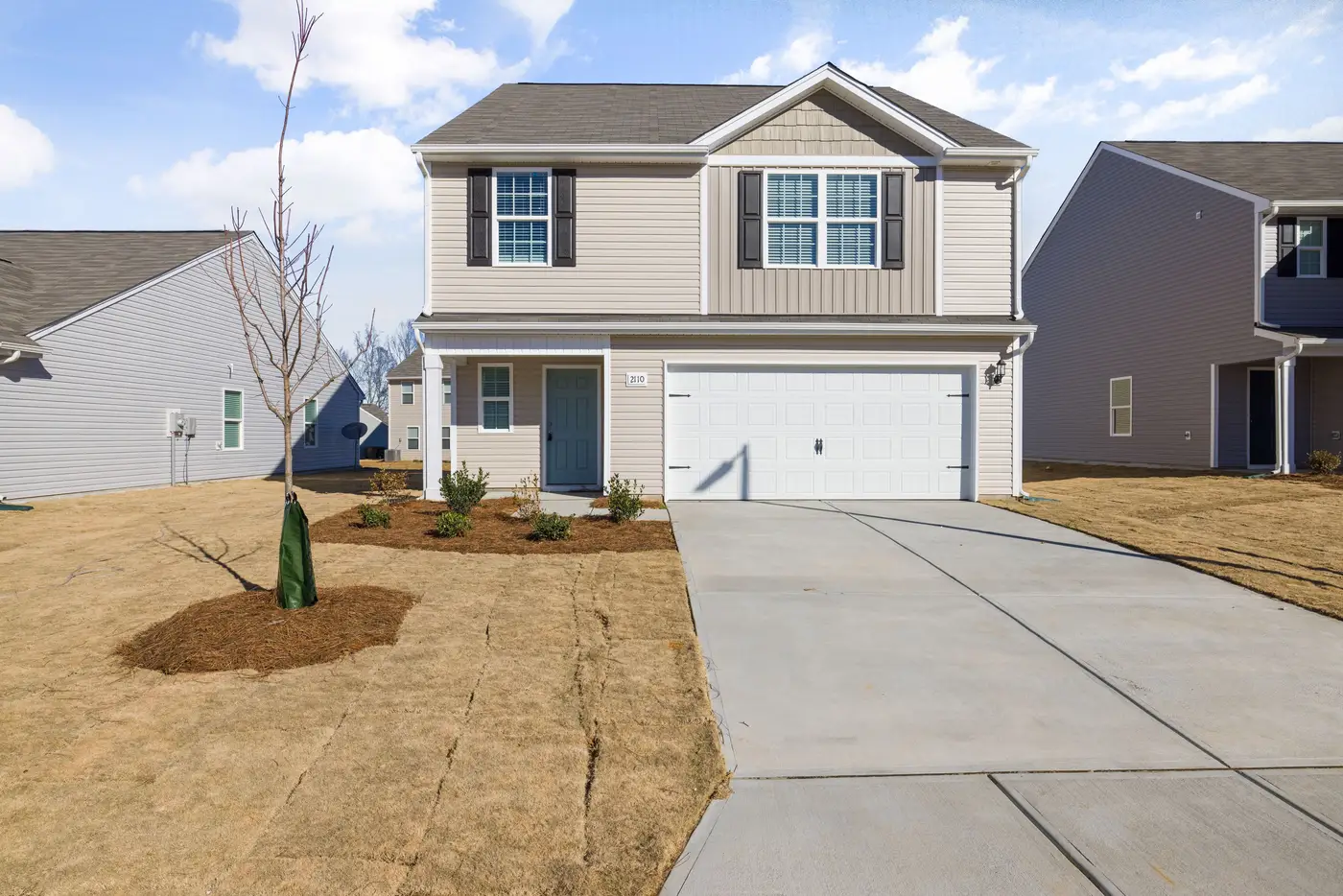
If you've ever pulled a UAD extract and tried to build a feature out of the condition field, you've probably noticed the same thing everyone on a model team eventually notices: the field is standardized, but the judgment behind it isn't.
The Uniform Appraisal Dataset is the data standard Fannie Mae and Freddie Mac rolled out starting in 2011 to make appraisal reports machine-readable and comparable across lenders. Before UAD, an appraiser could write "average condition, some updates" in a free-text comment and call it done. UAD forced that into structured fields with defined value sets, delivered through the URAR form and submitted via the Uniform Collateral Data Portal (UCDP). For anyone building a valuation model, that was a real gain. You went from parsing prose to pulling a column.
What UAD standardizes
UAD covers the fields you'd expect on a 1004: site, view, quality of construction (Q1-Q6), and condition (C1-C6), plus the comparable sales grid. The condition rating is the one most AVM teams lean on hardest, because it's the closest thing to a curb-appeal proxy that comes pre-packaged in the appraisal data. C1 means new or like-new. C6 means the property needs extensive repair or is uninhabitable. Everything in between is supposed to reflect wear, deferred maintenance, and updates relative to the age of the home.
That's the standard. It's a good one. It just doesn't solve the problem most data science leads have, which is that the rating is still a single appraiser's call, made once, usually at the time of origination or a refi, and then frozen in the record until the next full appraisal happens years later, if it ever does.
Where the C1-C6 value comes from
An appraiser walks the property, compares it informally against the comps they've already selected, and assigns a bucket. There's no sensor, no photogrammetry, no independent check against neighboring parcels unless the appraiser happens to notice them. Collateral Underwriter and other GSE risk tools flag outliers after the fact, which catches some bad ratings, but the underlying input is still one person's visual judgment on one day.
This creates a real problem for a model team. Appraisers in different markets apply the C-scale with different leniency, so a C3 in one MSA isn't necessarily a C3 in another. The rating also doesn't update between transactions, so a property that's been neglected for six years since its last appraisal still carries whatever condition code it got back then. Feed UAD condition into an AVM as-is, and you're encoding a stale, market-inconsistent categorical variable and hoping the model learns around it.
The gap an AVM inherits
None of this is a knock on UAD. It did what it set out to do: make appraisal data structured and portable across lenders and GSEs. The gap is that it was never designed to be a continuously updated condition signal for a model that needs to score properties that haven't had a recent appraisal at all, which is most of the properties in your AVM's universe at any given time.
This is the piece that tabular data, UAD included, just doesn't carry: what the parcel and the block around it look like right now, not at last appraisal. A property's roof, yard, and neighboring lots are visible from above well before anyone orders a new 1004. A learned embedding of the parcel and its immediate surroundings gives a model that curb-appeal and context signal as a vector input, refreshed on an annual cycle instead of whenever an appraiser next walks the block.
If your condition field is doing more work in your model than its freshness can support, it's worth looking at what a parcel-level imagery signal could add alongside it.